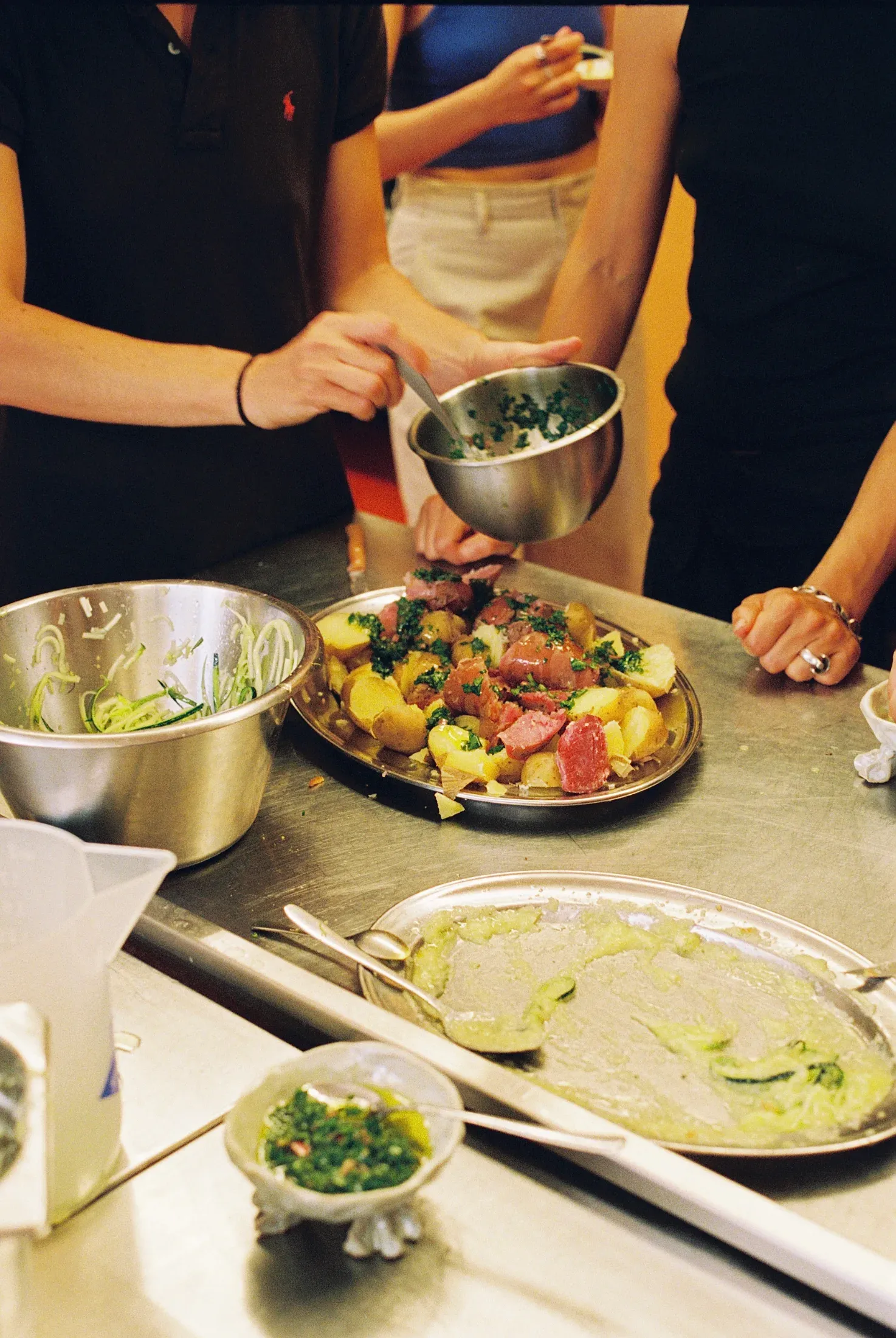
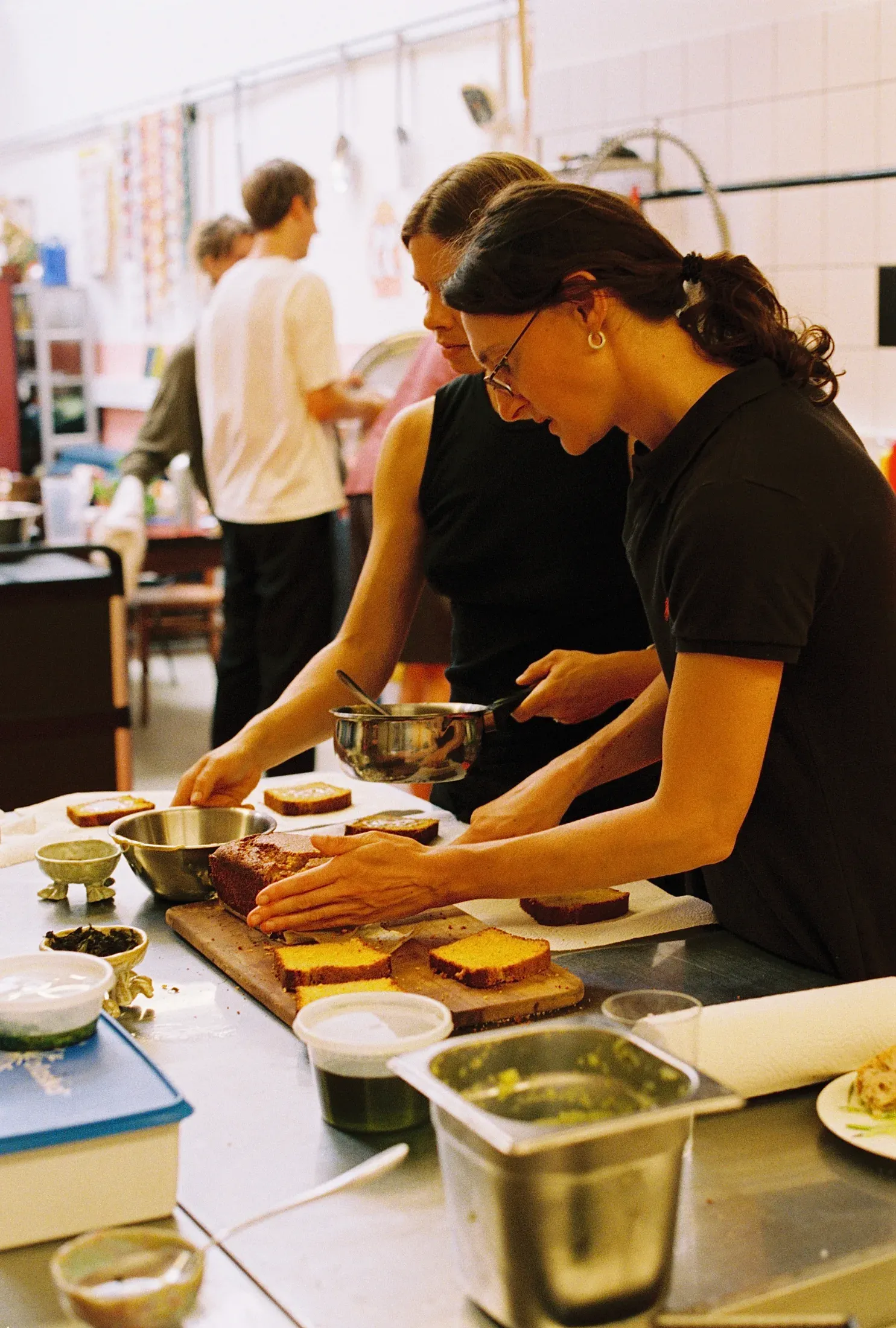
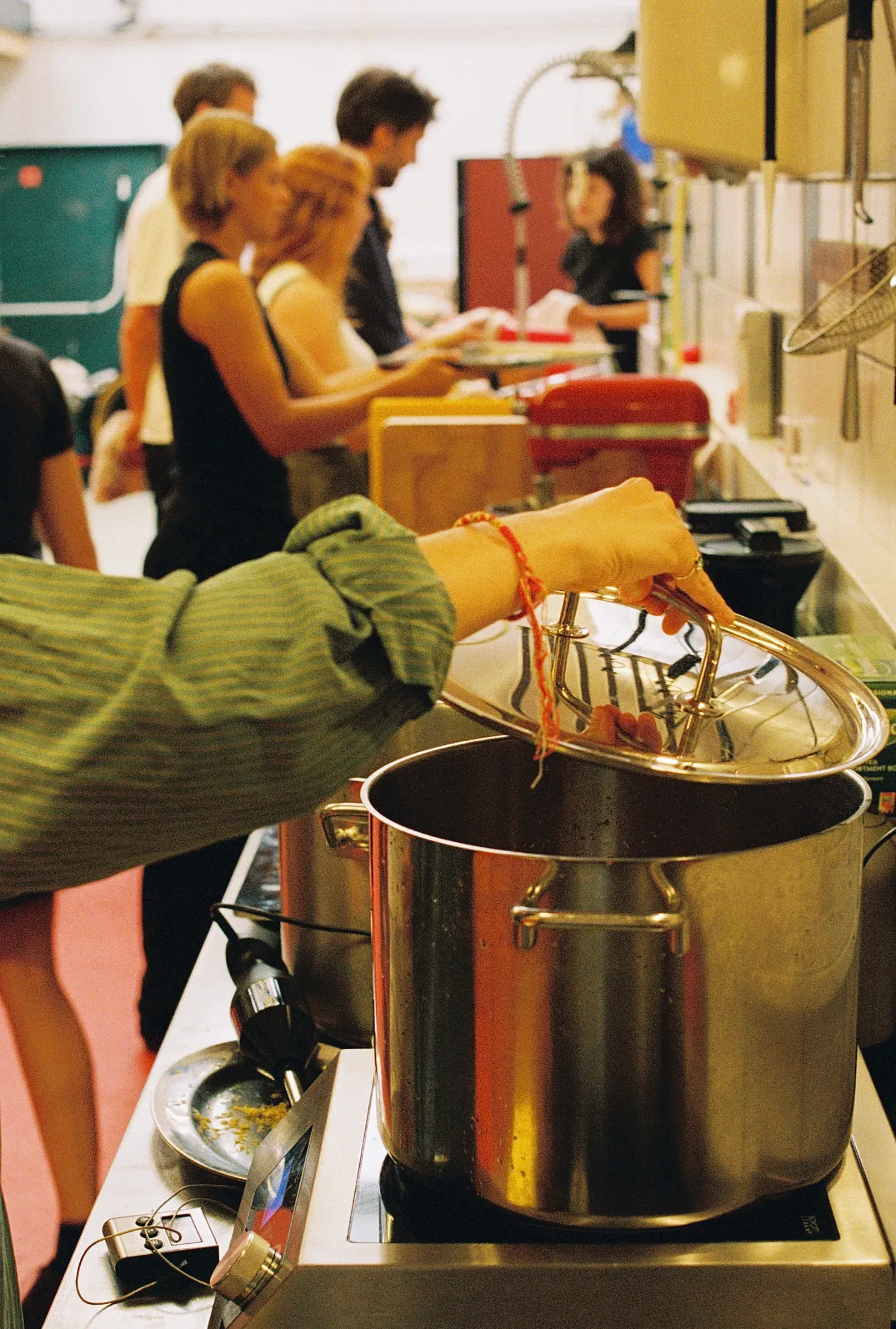
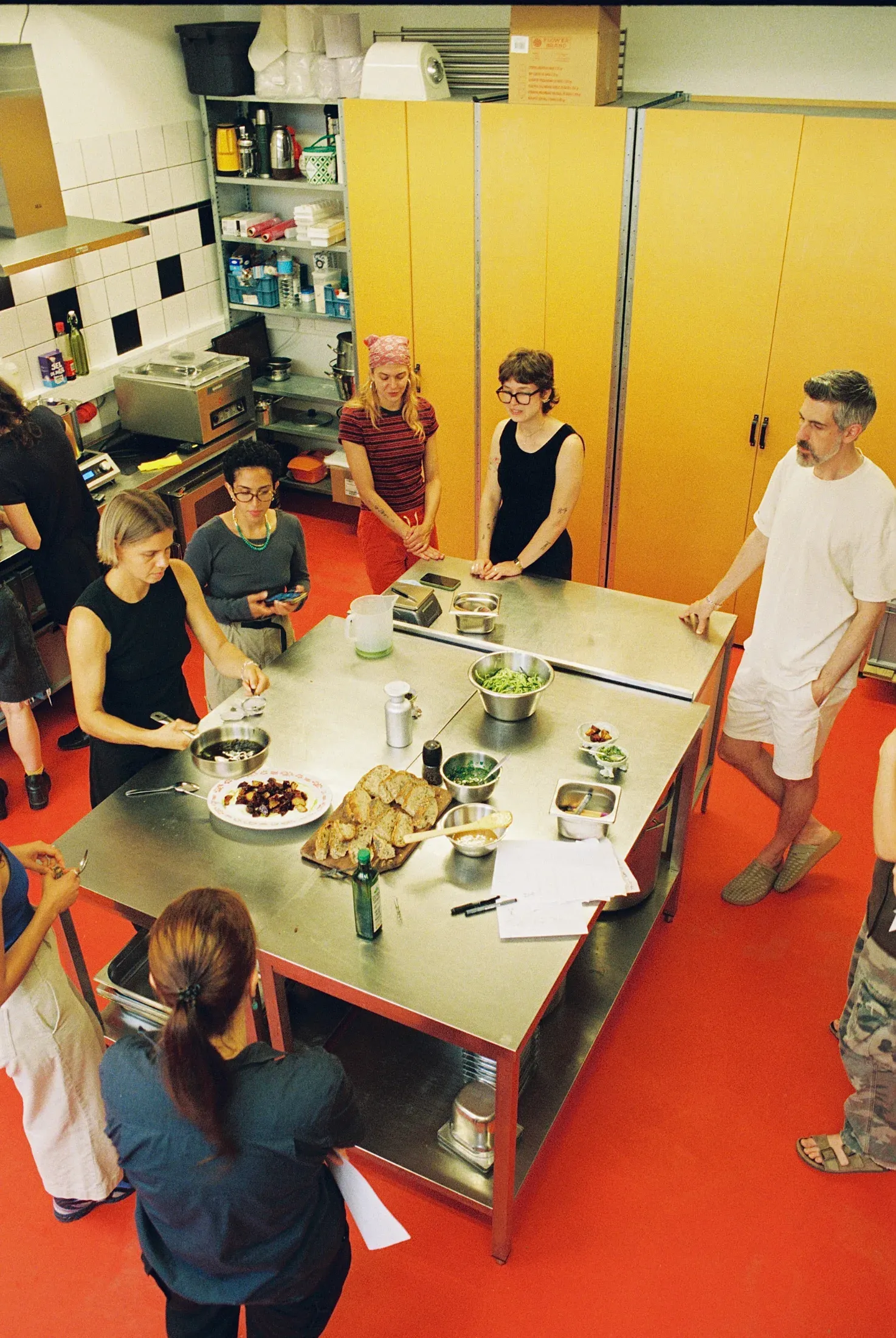
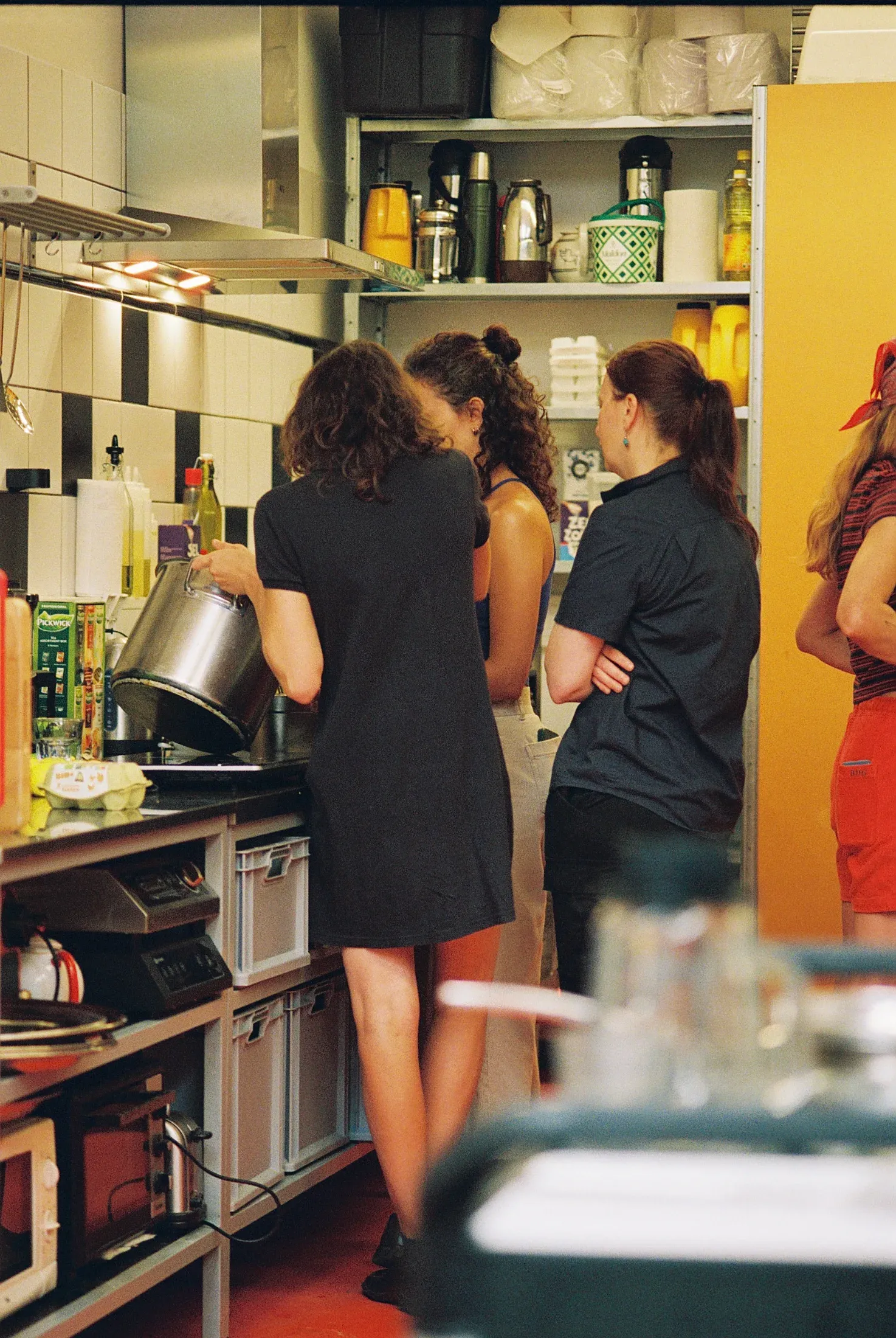
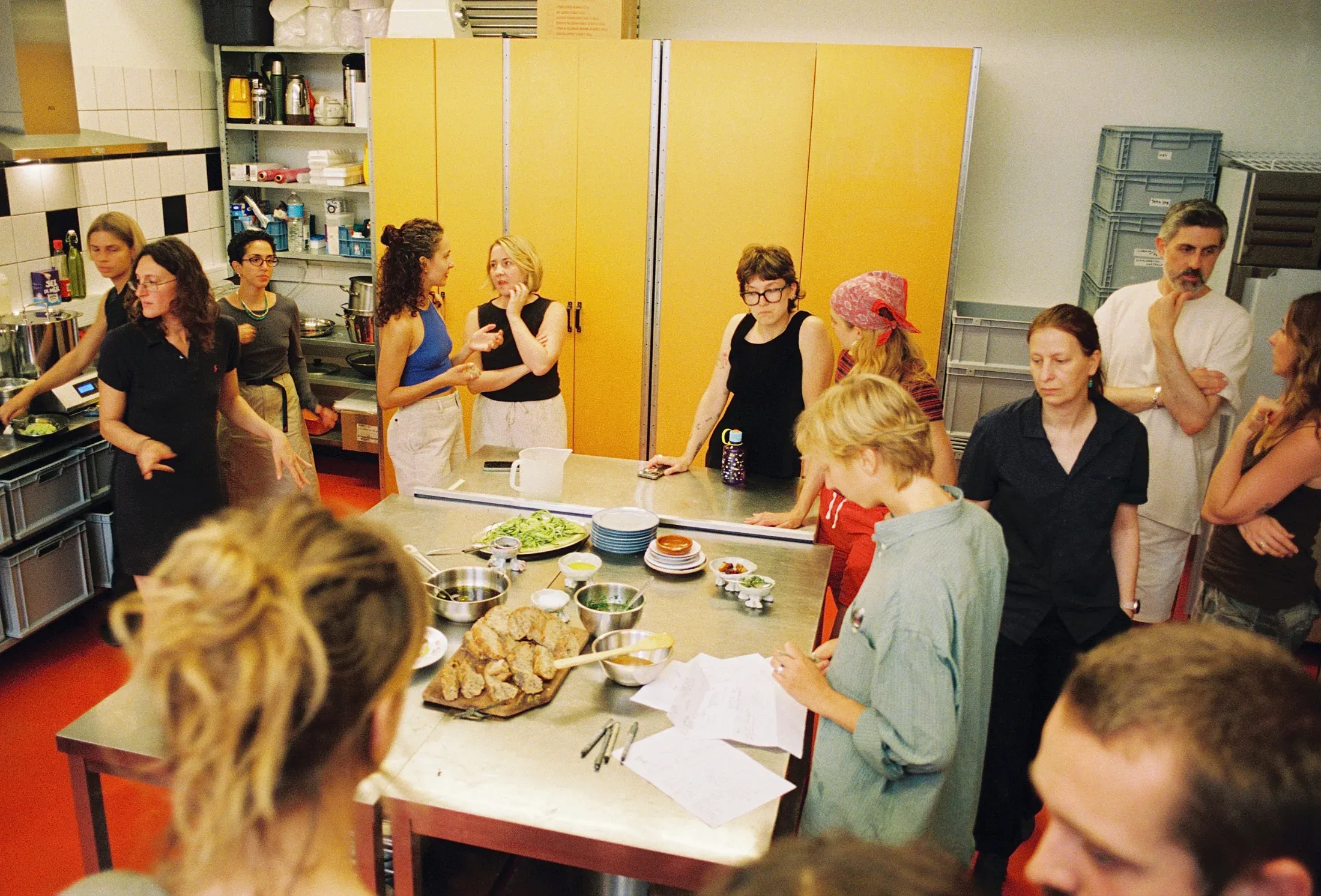
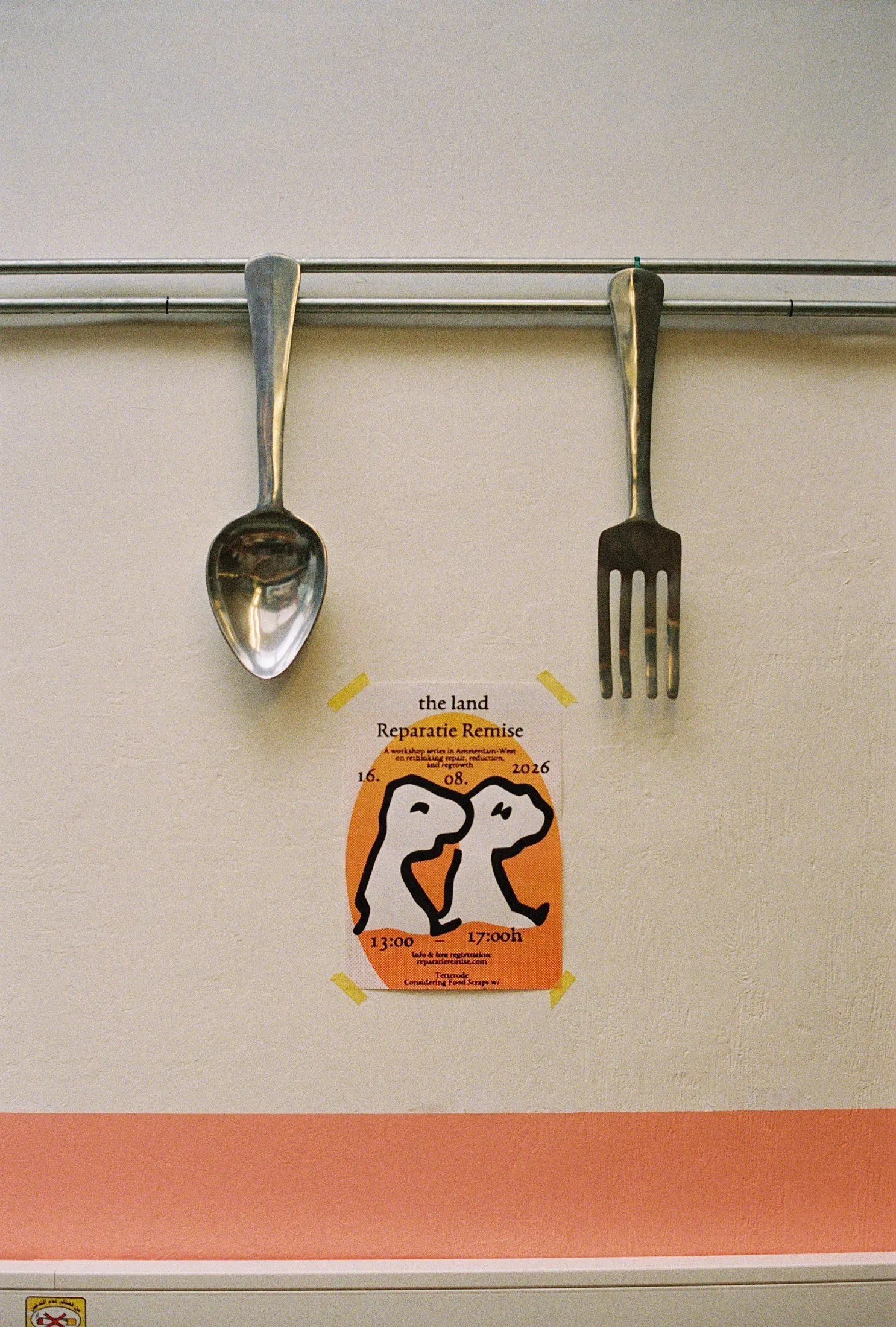
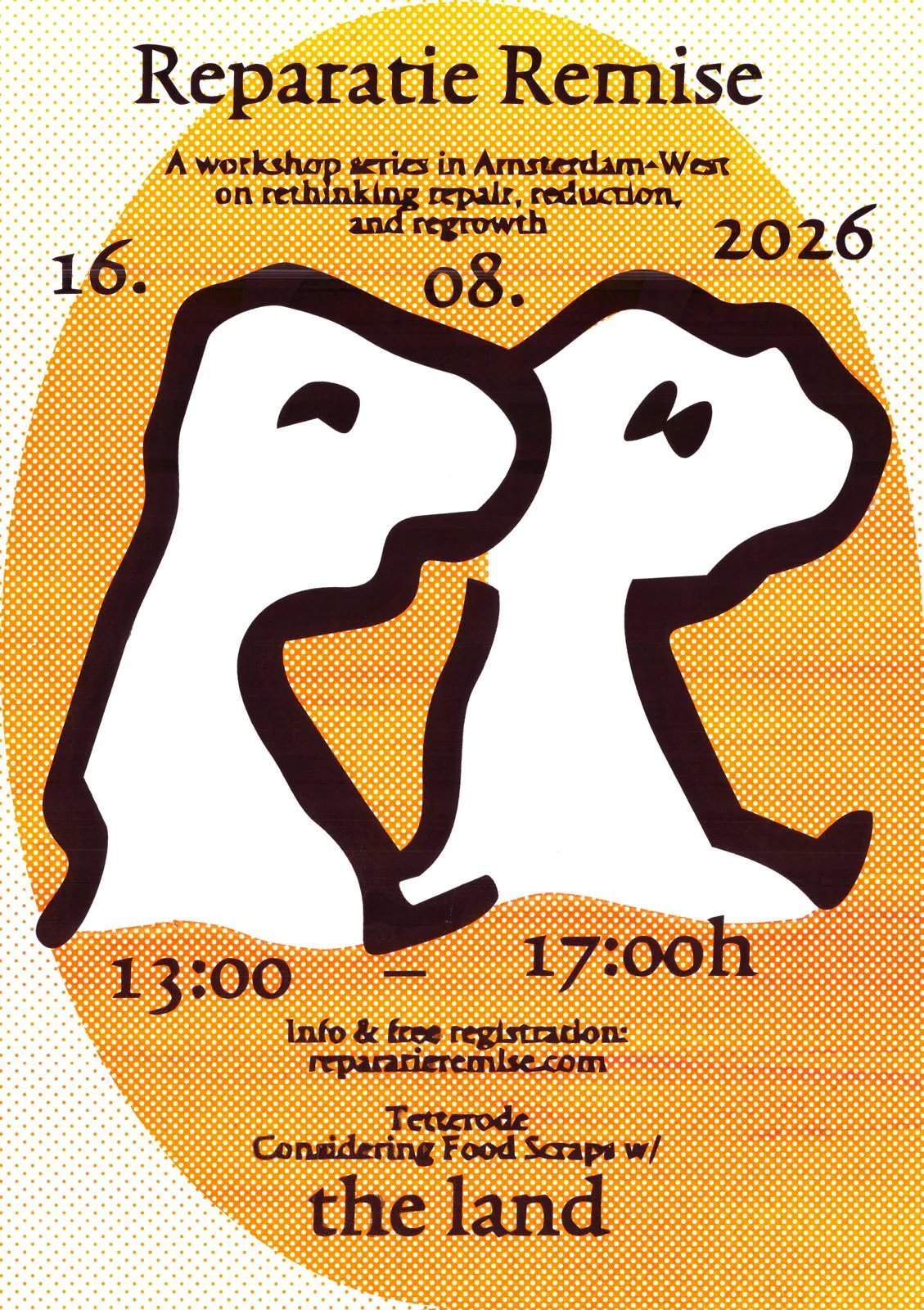
Considering Food Scraps encouraged participants to reconsider what we typically see as the “unusable” parts of plants, even though many of them are perfectly edible. Through the concept of ‘root to fruit’ cooking, we explored how cultural norms, convenience culture, and the ‘beigification’ of cooking have shaped what we eat and what we throw away.
For people living in cities, who often have less access to composting, parts of plants that are not used in cooking can end up in landfill. As food decomposes without oxygen, it produces methane, a greenhouse gas that traps about 80 times more heat than CO₂ over a twenty-year period.
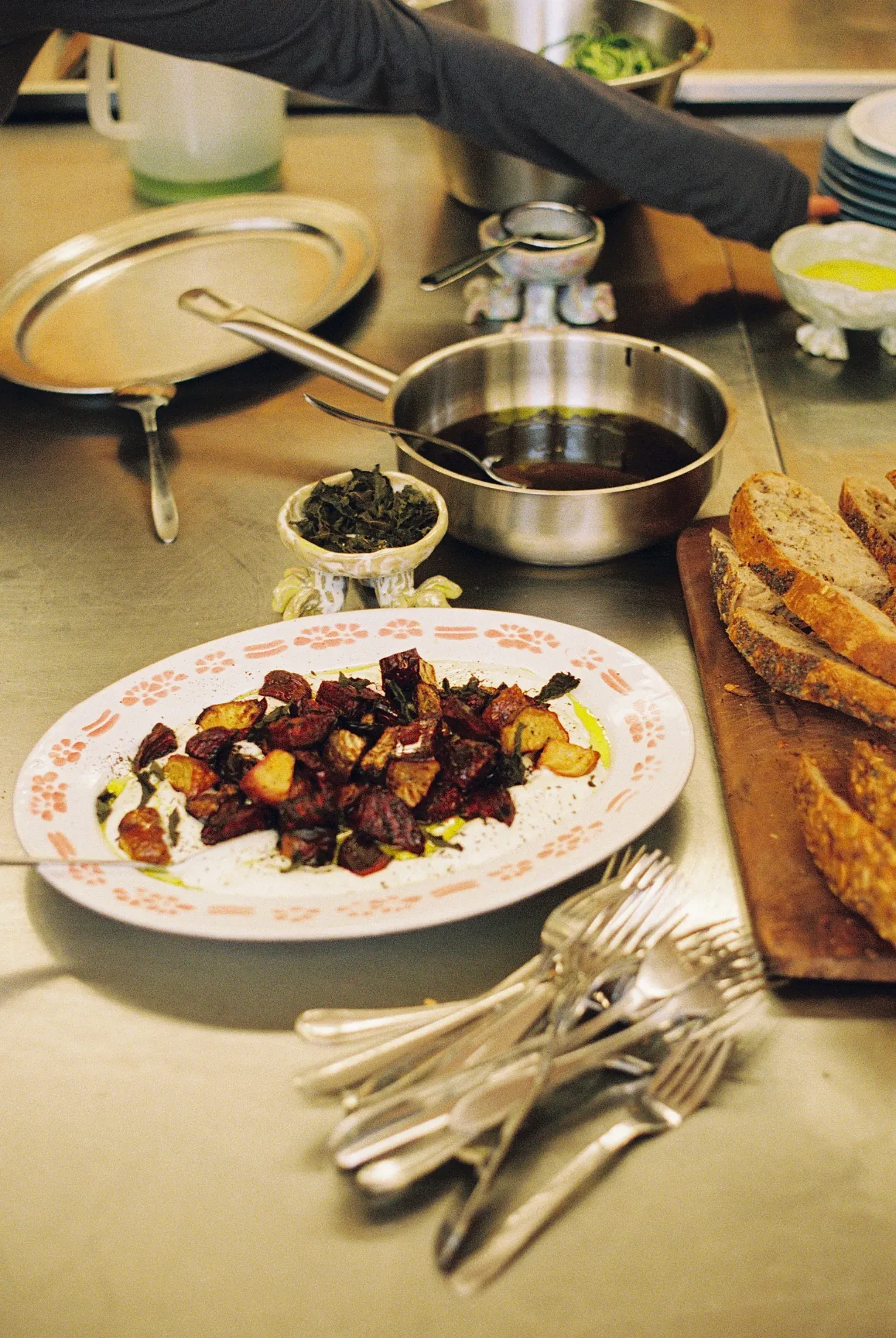
So how could we throw away less food, especially when we do not have access to a composting system? During the workshop, we worked with commonly found Dutch vegetables that are often only partially used, including radishes, carrots, beets, leeks, and fennel. Together, we used the whole plant to create a simple, delicious, and waste-free meal.
the land
the land (co-founded by Jessie Breslau + Elise de Jong) is an agricultural and social experiment that weaves together agroecological and community building practices between zuidoostbeemster and amsterdam. the majority of food that they grow on their 1400m2 plot is not sold, but used in the workshops, dinners, and events in and near amsterdam. they believe in building relationships through and around food and feel that those bonds strengthen with every possible tactility.